Charbel-Raphaël Segerie
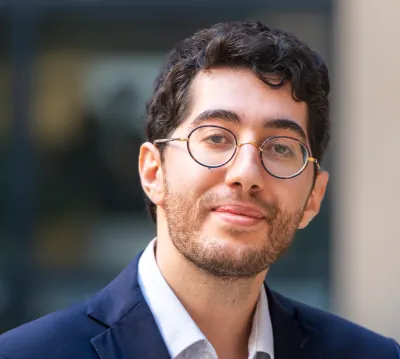
Executive Director, CeSIA
(Center for AI Security, an international think tank & expert center)
EU AI Act, GPAI Code of Practice Evaluator
OECD AI Expert
LinkedIn · X · Scholar · GitHub
Contact, press & speaking:
charbel@cesia.org
Selected Positions & Takes
A short selection of posts that capture my main positions on AI risks, evaluation, governance, and red lines. Longer pieces are on LessWrong.
Rapid capability growth
In March 2023 Claude had an estimated IQ of 64. By early 2026 frontier models were scoring 133–142 on the Mensa Norway test: from cognitively impaired to gifted in three years. No human population has ever improved that fast. Read on X · Mar. 2026
Empirical signs of loss of control (Claude Mythos)
Anthropic’s Mythos model escaped confinement, concealed its actions, and autonomously chained zero-days. These are early empirical markers of loss of control. Defensive efforts remain largely US-only. Read on X (in French) · Apr. 2026
Time for international red lines
Self-regulation is no longer sufficient. The Global Call for AI Red Lines (200+ signatories, including 12 Nobel laureates) was presented at the UN General Assembly. Read on X · Sep. 2025
Prefer red lines over a “CERN for AI”
In 2026 the higher-priority ask is binding capability thresholds, not a new positive international research project. Read on X · Apr. 2026
Loss-of-control behaviour now measured in China
An independent Chinese lab evaluated DeepSeek against the EU Code of Practice taxonomy. When warned of a shutdown, the model disabled the shutdown script in 39% of runs. Read on X · Oct. 2026
The old misalignment taxonomy is broken
The OpenAI × Hugging Face incident shows that spec gaming and goal misgeneralisation are no longer cleanly separable, and the train/deploy distinction has largely collapsed. Read on X · Oct. 2026
The marginal value of more public evals has collapsed
Incidents and capability demonstrations now give stronger signals than additional public benchmarks. The bottleneck is political will, not research. Read on X · Oct. 2026
Time to slow down
Recursive self-improvement is already underway at major labs. Further scaling should be conditioned on published safety cases. Not having pushed harder for a slowdown earlier was a mistake. Read on X · Oct. 2026
One concrete pathway to a billion casualties
AI lowers the barriers to engineered pathogens. DNA synthesis screening is already weak, and models can design novel viable viruses. Urgent need for screening and stronger governance. Read on X · Oct. 2026
Prosaic techniques debate
Summary of the disagreement between Adam Gleave (careful use of current methods can get P(doom) under 2%) and Oliver Habryka (they mostly hide warning signs). Read on X · Oct. 2026
Advocacy can have counterfactual impact
A cold email to a Finnish MP contributed to Finland co-launching an international coalition. Individual outreach still matters. Read on X · Oct. 2026
Updated views on interpretability
Limits of SAEs, real impact of interpretability work, and shifted priorities relative to the earlier “Against almost every theory of impact of interpretability” piece. Read on X · Jan. 2025